
-
About UsYantai Vina-bridge Shipping Co., Ltd. was established in 2021 and its office is located in Shimao Building, Financial Center, Zhifu District, Yantai City, China.

-
BusinessThe company manages 10,000-ton bulk cargo ships as an agent, has a professional management team, and integrates ship management and ship management.
-
NewsThe company adheres to the principle of integrity, puts people first, and regards social responsibility and corporate responsibility as its own responsibility.
-
-
Contact UsYantai Vina-bridge Shipping Co., Ltd. is dedicated to serving you, and you are welcome to visit to discuss cooperation matters.
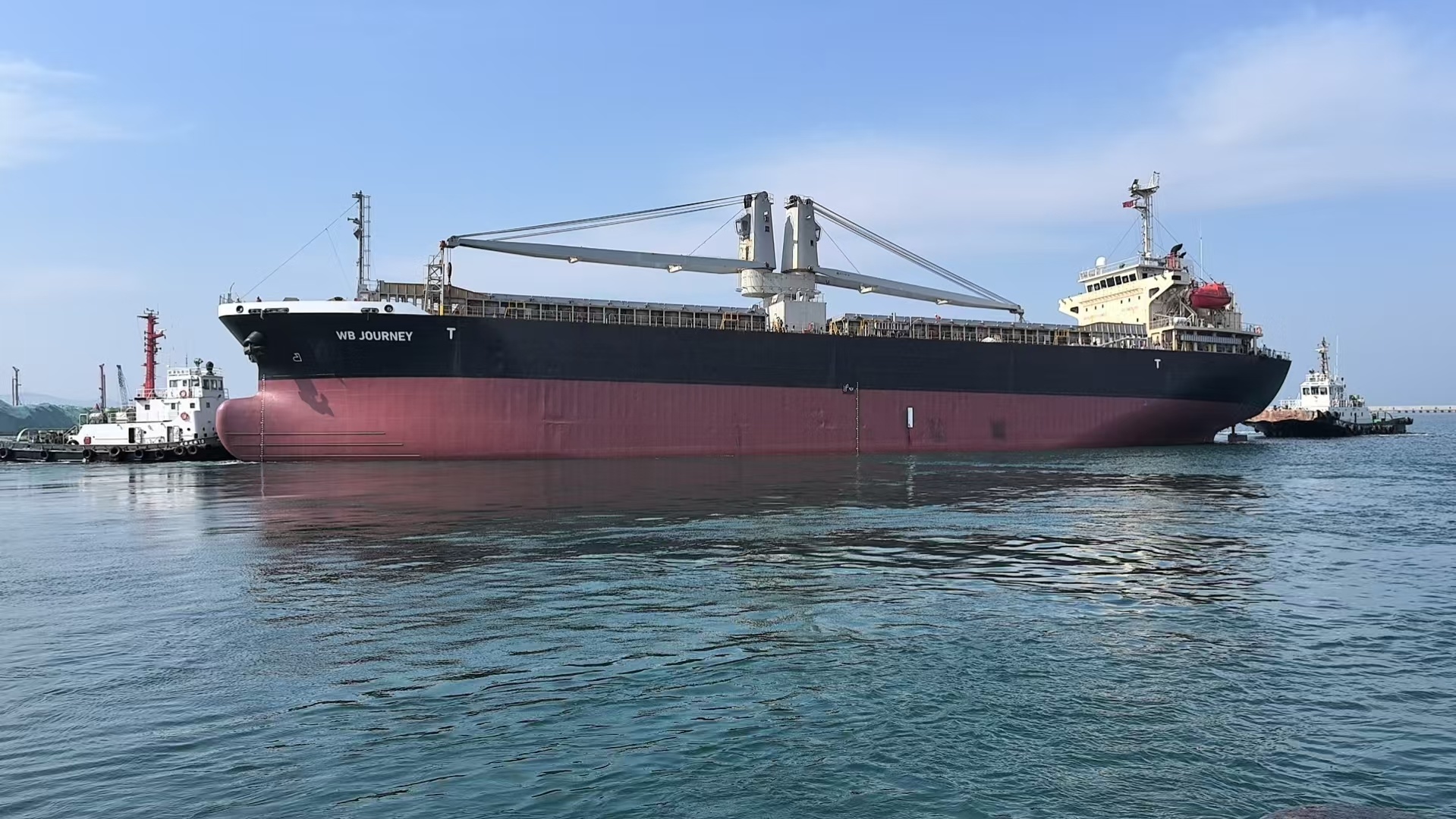
The shipping price war is coming, Maersk takes the lead
Release time:
16 Jun,2023
The once hair-trigger maritime price war finally has a signal: Maersk has cut prices.
According to the self-media "Shipping Network" in the shipping field, a number of Maersk routes have recently reduced prices.According to reports, Maersk announced on June 13th that the freight from Asia to the U.S. West Port would be reduced by US3350, and a special price for Yantian to the U.S. West port would be launched the next day.
Affected by Maersk's price reduction, spot market tariffs fell in response. On Monday, the tariffs remained at US11,150-1,250. Now most of them have fallen to US11,000, and some companies continue to stay on the US卡1,100 card slot line.
Maersk's price reduction is directly related to the current shortage of demand in the freight market.It is reported that Maersk's current space loading rate is only more than 70%. If the ship transportation cost is not reduced, the price reduction within a limited period can help it increase its business volume.
At the same time, Maersk has been focusing on promoting online booking in recent years to avoid salesmen or freight forwarders from making large price differences.In this system, Maersk can manage freight rates through AI. When the order reaches a certain quantity, the system will automatically increase the price, and if the order is not ideal, the price will be automatically reduced.
The industry expects that Maersk's behavior will continue to affect the maritime market. If the business volume during the peak market season in July is still not ideal, it will be more difficult for freight rates to rise, and there is a possibility of collapse.
However, there are also some differences in the situation of price wars.According to data released by Alphaliner, Maersk accounts for 22% of the capacity of the Asia-Europe route in the deployment of route capacity, 18% of the capacity is deployed on the Trans-Pacific route, and another 18% of the capacity is invested in the Latin American route.The routes that Maersk reduced prices this time are mainly concentrated on the U.S.-West Route, which does not occupy a central position in Maersk's capacity layout.However, it remains to be seen whether Maersk will expand the price reduction to the US East Coast routes in the future.At the same time, the current European routes are relatively stable, and this market accounts for a relatively high proportion of Maersk's revenue. It is expected that Maersk should not easily extend the price war to this area.
Maersk is the second largest liner company in the world.According to data released by Alphaliner, as of June 12, 2023, Maersk Line has a capacity of 4.2171 million TEU, accounting for 15.3% of the global capacity market, second only to Mediterranean Shipping, which accounts for 18.7% of the market. The third place is Delta, with a market share of 12.9%.But if new ship-building orders are added, Dafei is comparable to Maersk Line.
Alphaliner's report also shows that the capacity of the top ten container liner companies accounts for 84.3% of the global market, and the capacity of the top twenty container liner companies accounts for 90.5% of the global market.
In addition to transportation demand, capacity is another major factor affecting freight rates.Previously, according to a data from Alphaliner in mid-May, the container shipping market had 160,000 TEU of idle capacity put into the market, and the average speed of container ships was also rebounding.This also means that the already excess capacity has increased again, and the contradiction between supply and demand balance continues to deepen.
In this regard, Kang Shuchun, president of the International Freight Forwarding Branch of the China Federation of Logistics and Procurement, said in an interview with Interface News that shipping companies still have many orders, and it is expected that the deployment of new capacity will continue until 2033. It is difficult to stop the inertia of capacity increase, and the future capacity growth will continue.
In addition, in the long run, it is difficult to hope that freight prices will rise.Zheng Jingwen, assistant director of the Shanghai International Shipping Research Center and the Institute of International Shipping Research, analyzed this and said that overall, by 2024, the consolidation market will be under relatively large capacity pressure, and freight rates may be in a bottom-shaking situation, and the profitability pressure of shipping companies will continue to increase, and it is not even ruled out that there will be mergers and acquisitions. The phenomenon of reorganization.
Yantai Vina bridge Shipping Co., Ltd.
Address: 5101, Block B, World Trade Center, No. 156 Jiefang Road, Zhifu District, Yantai City, Shandong Province, China
Tel: +86-535-6272767
Email: admin@vina-bridge.com
QR Code